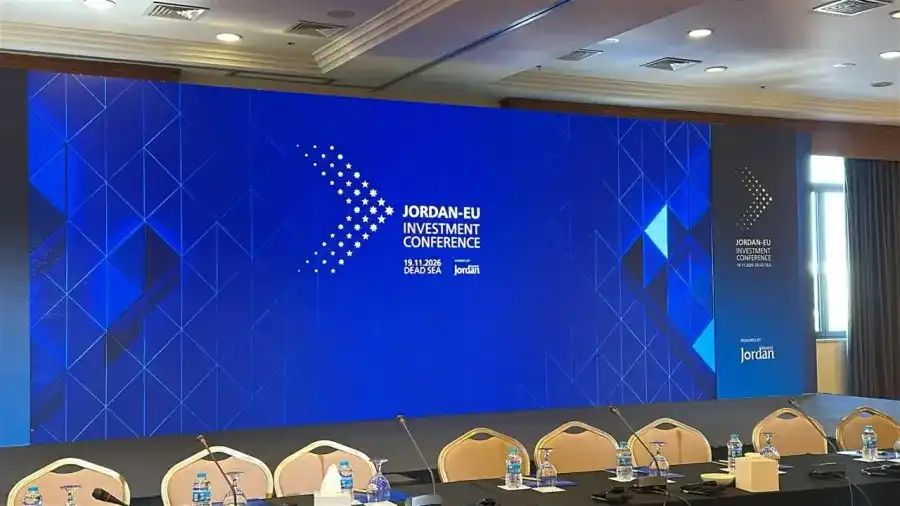

السرعة تجذب المستثمر، والثقة تستبقيه. هذه هي الخلاصة التي خرجتُ بها من الجلسات التمهيدية لمؤتمر الاستثمار الأردني الأوروبي، التي انطلقت الأربعاء على شاطئ البحر الميت بمشاركة مسؤولين حكوميين ومستثمرين وقادة أعمال، لبحث الفرص الاستثمارية والشراكات في القطاعات الاقتصادية الرئيسية، تمهيداً لافتتاح المؤتمر رسمياً الخميس تحت رعاية جلالة الملك عبدالله الثاني ابن الحسين، أطال الله بعمره وحماه، وبمشاركة رئيسة المفوضية الأوروبية أورسولا فون دير لاين. ويطرح المؤتمر أكثر من 41 فرصة استثمارية تتجاوز قيمتها 15 مليار دولار، في التكنولوجيا والطاقة والصناعات ذات القيمة المضافة العالية والخدمات اللوجستية والبنية التحتية والأمن المائي. غير أن الفرص وحدها لا تصنع شراكة، فالمستثمر يقرأ الفرصة بعين، ويقرأ الثقة بالعين الأخرى.
حضرتُ ثلاثاً من هذه الجلسات: طاولة مستديرة بعنوان «صياغة العرض التقني الأوروبي الأردني المشترك»، وجلسة عن المواهب الرقمية، وطاولة مستديرة بعنوان «شراكات أشباه الموصلات بين أوروبا والأردن». لكلٍّ منها زاويتها، لكنّ سؤالاً واحداً ظل يتردد فيها جميعاً: كيف نحوّل ما يملكه الأردن إلى ثقة يستطيع شركاؤه أن يتحققوا منها بأنفسهم؟في الجلسة الأولى، التي أدارها فريق برنامج «جوردن سورس» بالشراكة مع الاتحاد الأوروبي، بدا عرض الأردن مقنعاً: طاقة متجددة بكلفة منافسة، وأراضٍ متاحة، وكوابل تصلنا بأوروبا، ونافذة استثمارية واحدة تختصر زمن التراخيص. و«جوردن سورس» برنامج أطلقته وزارة الاقتصاد الرقمي والريادة عام 2021 ضمن مشروع الشباب والتكنولوجيا والوظائف، ليكون نقطة اتصال لشركات التكنولوجيا الراغبة في التوسع إلى المملكة. هذا العرض يجيب جيداً عن سؤال «لماذا الأردن؟». أما مجلس إدارة أي شركة أوروبية فسيطرح قبل التوقيع سؤالاً آخر: كيف نُثبت لجهاتنا الرقابية أن بياناتنا وعملاءنا ومنتجاتنا في مأمن هناك؟وفي قراءتي لما سمعته في الجلسات الثلاث، تقف بين ما يملكه الأردن وما يحتاجه شريكه كي يثق به ثلاث فجوات: فجوة التحقق، وفجوة الاحتفاظ بالكفاءات، وفجوة القناعة. وسدّها هو ما ينقل عرضنا من منطق الكلفة إلى منطق الثقة.الفجوة الأولى فجوة التحقق، وجوابها المعايير. اعتدنا في العمل الدبلوماسي أن نذكر المعايير على استحياء، كأنها تفصيل تقني جاف، وهي في حقيقتها الثقة مكتوبةً بلغة يفهمها الجميع، والضمانة التي تخفّض المخاطر وتحمي الاستثمار. وقد عدتُ من الصين قبل ساعات من هذه الجلسات، وهناك لا تُعامَل المعايير معاملة الأوراق والإجراءات، بل معاملة الاستراتيجية. فقد أصدرت الصين عام 2021 مخططاً وطنياً لتطوير التقييس يمتد أفقه إلى عام 2035، ويتداول صنّاع القرار وقادة الأعمال فيها مقولة شائعة: شركات الدرجة الثالثة تصنع المنتجات، وشركات الدرجة الثانية تصنع التكنولوجيا، أما شركات الدرجة الأولى فتضع المعايير. وأوروبا، صاحبة واحدة من أعرق منظومات المعايير في العالم، أولى بأن تتحدث عن معاييرها بهذه الثقة، والأردن أولى بأن يتبنّاها مبكراً.وفي طاولة أشباه الموصلات كان المعيار حاضراً، وإن لم يُسمَّ دائماً باسمه. فقد أعلن الأمين العام للمجلس الوطني لتكنولوجيا المستقبل الدكتور بشار الكيلاني أن أيلول الماضي شهد افتتاح أول شركة في الأردن متخصصة في تجميع الرقائق واختبارها وتغليفها، وتحدّث الدكتور نسيب ناصر، مؤسس شركة Orion ورئيسها التنفيذي، عن اتخاذ شركته من الأردن قاعدة لإطلاق معالج آمن مبني على معمارية RISC-V المفتوحة، ودعا الدكتور أمجد العبداللات، الرئيس المشارك للجنة الفرعية لأشباه الموصلات، إلى أن يكون الأردن بيئة اختبار تضع «المعيار الذهبي» للموثوقية وقابلية التفسير وسجل التدقيق حين يدخل الذكاء الاصطناعي البنية التحتية الحيوية، واقترح السيد يان كونه، الرئيس التنفيذي لأكاديمية غرونديغ الألمانية (GRUNDIG AKADEMIE)، أن تكون تطبيقات الصحة ميداناً للعمل المشترك. وما يجمع هذه المداخلات أنها تدور كلها حول ثقة يمكن التحقق منها: فالاختبار في جوهره تحقّق، والمعالج الآمن وعد يحتاج إلى إثبات، والمعيار الذهبي سجل قابل للتدقيق، والصحة قطاع لا يدخله إلا من يملك الدليل.والمعايير المطلوبة موجودة ومكتوبة. فالمفوضية الأوروبية صنّفت عام 2023 أشباه الموصلات المتقدمة بين أربع تقنيات رأت أنها الأكثر حساسية لأمنها الاقتصادي، وقانون المرونة السيبرانية الأوروبي يعدّ المعالجات والمتحكمات الدقيقة ذات الوظائف الأمنية منتجات مهمة، والمخطط الأوروبي لاعتماد الأمن السيبراني القائم على المعايير المشتركة يتيح اتفاقيات اعتراف متبادل مع دول من خارج الاتحاد. فإذا صمّمت شركاتنا وفق هذه المتطلبات منذ اليوم الأول، وجعلنا مرحلة الاختبار في الأردن نقطة تحقّق من أن الرقاقة العائدة من مصنعها في الخارج هي عينها الرقاقة التي صمّمناها، صار المنتج الأردني مكوّناً موثوقاً في سلسلة التوريد الأوروبية. وفي الصحة تُعامَل أنظمة الذكاء الاصطناعي المدمجة في الأجهزة الطبية في الغالب معاملة الأنظمة عالية المخاطر، فالمعيار هناك شرط دخول لا ترف. أما «المعيار الذهبي» الذي دعا إليه الدكتور العبداللات فله مواد محددة في قانون الذكاء الاصطناعي الأوروبي، من حفظ السجلات والشفافية إلى الرقابة البشرية، بما فيها القدرة على إيقاف النظام في وضع آمن، وصولاً إلى المتانة والأمن السيبراني. وإذا بُنيت بيئتنا عليها، بمختبرات معتمدة ومسار اعتراف متبادل مع أوروبا، صارت معياراً معترفاً به، فالمعيار الذهبي يُكتسب ولا يُعلَن.ولدى الأردن ما يبني عليه. فهو في الفئة الأولى، فئة الدول النموذجية، في المؤشر العالمي للأمن السيبراني لعام 2024 الصادر عن الاتحاد الدولي للاتصالات، وقانون حماية البيانات الشخصية نافذ فيه منذ آذار 2024. وفي العقبة يملك المكان الطبيعي لتجربة أولى لما أقترحه: مسار للمعايير يسير جنباً إلى جنب مع مسار التراخيص في النافذة الاستثمارية الواحدة. فمركز العقبة الرقمي (Aqaba Digital Hub)، الذي افتتحه سمو الأمير الحسين بن عبدالله الثاني، ولي العهد، في تشرين الأول 2025، يضم أكبر مركز بيانات في المملكة بقدرة تشغيلية تصل إلى 12 ميغاواط، وأول محطة إنزال للكوابل البحرية في المملكة بسياسة وصول مفتوح، وأول مركز محايد لتبادل البيانات، وقد أطلق منصة Klstrai، أول منصة مخصصة للحوسبة بالذكاء الاصطناعي مستضافة محلياً في المملكة. ويحظى المركز بتمويل من البنك الأوروبي لإعادة الإعمار والتنمية، بدعم من الاتحاد الأوروبي، لتوسعته ببناء قاعة ثانية وإطلاق أكاديمية للمهارات الرقمية. أي أن العقبة تجمع اليوم في موقع واحد البنية التحتية والربط الدولي والشريك الأوروبي والمهارات.ومراكز البيانات هي أول ما يُختبر فيه هذا المسار. ففي الاتحاد الأوروبي تُلزَم المراكز التي تبلغ قدرتها 500 كيلوواط فأكثر بالإفصاح سنوياً عن أدائها في استهلاك الطاقة والمياه. والأمن المائي من محاور المؤتمر نفسه، والأردن من أكثر دول العالم شحّاً في المياه، إذ لا تتجاوز حصة الفرد فيه من المياه المتجددة 84 متراً مكعباً في العام، وبوسعنا أن نحوّل هذا القيد إلى معيار إقليمي للتبريد الموفّر للمياه، بدلاً من أن يُحسب علينا. وأي منشأة تستورد رقائق متقدمة وتعيد تصديرها إلى كبار مزوّدي الحوسبة السحابية هي ملف لضوابط التصدير قبل أن تكون ملفاً تجارياً، وسلامة سلسلة الحيازة فيها أقوى حافز يمكن أن نقدّمه. ولا قيمة لقرب المسافة الرقمية بيننا وبين أوروبا إن لم يُسمح للبيانات أصلاً بعبورها، ومسار أردني أوروبي نحو قرار الملاءمة، أي اعتراف الاتحاد الأوروبي بأن حماية البيانات في الأردن تكافئ في جوهرها حمايتها لديه، هو الخطوة الطبيعية التالية.الفجوة الثانية فجوة الاحتفاظ بالكفاءات. ففي جلسة المواهب الرقمية، التي نظّمتها الوكالة الألمانية للتعاون الدولي (GIZ) بالشراكة مع مؤسسة Partners for Good، اتضح أن الأردن لا يملك الكفاءات فحسب، بل يملك منظومة لصقلها. عرض معالي وزير الاقتصاد الرقمي والريادة المهندس سامي سميرات خطوط الدعم في مشروع الشباب والتكنولوجيا والوظائف، الممول من مجموعة البنك الدولي بقيمة 200 مليون دولار: رصد مستمر لما يحتاجه أصحاب العمل، ومسارات تدريب يقودها القطاع الخاص، وتأهيل مصمّم حول الوظائف التي يبحث المستثمرون فعلاً عمّن يشغلها. وكان بين الحاضرين علي أبو كميل من مجموعة البنك الدولي، وهو من قادة الفريق الذي صمّم المشروع عام 2020. وذكّر معاليه بأن النساء يشكّلن نحو نصف خريجي تكنولوجيا المعلومات والاتصالات في الأردن، وهي حقيقة تستحق أن تتصدّر عرضنا للعالم. وقال توماس شفايغر من المفوضية الأوروبية إن الأردن يُنظر إليه بوصفه جسراً بين أوروبا والعالم العربي في المواهب الرقمية، وأوضح توماس مولر من الوكالة الألمانية للتعاون الدولي أن الغاية مواءمة المهارات الأردنية مع متطلبات التشريعات الأوروبية واحتياجات الشركات، وأقرّ الدكتور إسماعيل الحنطي، رئيس جامعة الحسين التقنية، بأن الجامعات ستبقى متأخرة عن الصناعة بخطوة، وبأن العلاج في تغيير فلسفة التعليم نفسها.وفي طاولة أشباه الموصلات جاءت الأدلة من الميدان. روى الدكتور ناصر كيف صمّم فريق من حديثي التخرّج الأردنيين رقاقة متقدمة باتت اليوم في الأسواق العالمية، وبدأ الدكتور خلدون أبو غربية شركة Golden Electronics عام 2012 مع اثنين من طلبته فإذا هي اليوم تضم 170 مهندساً، واستقبلت ثلاث جامعات أردنية هذا الخريف أول طلبة برامج معتمدة في أشباه الموصلات. لكنّ الدكتور فادي عبيدات نبّه إلى أن مهندسين أردنيين انتقلوا خلال عامين إلى كبرى شركات الرقائق في أوروبا وكندا، وعدّ الدكتور ناصر الاحتفاظ بالكفاءات أكثر ما يؤرقه. وقد أعلن معاليه التزام الحكومة بتحمّل كلفة إعادة التأهيل ورفع المهارات والأشهر الأولى من رواتب الموظفين الجدد لدى المستثمرين، ومع التحضير لمرحلة ثانية من مشروع الشباب والتكنولوجيا والوظائف تبدو اللحظة مواتية لأن ينتهي التدريب الممول بشهادات يعترف بها صاحب العمل الأوروبي. فأوروبا تعاني نقصاً بمئات الآلاف من مختصي الأمن السيبراني، ووضعت وكالة الاتحاد الأوروبي للأمن السيبراني إطاراً للمهارات يحدد اثني عشر ملفاً مهنياً يمكن البناء عليه، وأكاديمية المهارات في العقبة مكان طبيعي لتجربة أولى. بهذا يحمل الخريج شهادة لا مجرد دورة، ويوظّف المستثمر وفق معيار لا وفق وعد، وننقل العمل إلى الأردن بدلاً من أن ننقل العامل إلى الخارج.الفجوة الثالثة فجوة القناعة. قالها الدكتور ناصر بصراحة: كبرى شركات الرقائق لا تصدّق بعدُ أن عملاً كهذا يمكن أن يُنجَز في منطقتنا. والقناعة لا تُبنى بالحوافز وحدها، بل بقصص نجاح موثّقة يمكن التحقق منها، وبدبلوماسية تعرف كيف ترويها. ومن موقعي دبلوماسيةً سابقة أمضت سنوات في استقطاب شركات التكنولوجيا إلى الأردن، استوقفتني شهادة السيد كونه، الذي يقود أكاديمية غرونديغ للاقتصاد والتقنية، وهي مؤسسة ألمانية غير ربحية للتعليم والتدريب المهني أسسها ماكس غرونديغ في نورنبيرغ عام 1978، وتعمل في التأهيل التقني والإداري وفي الرعاية الصحية. فقد قال إنه لم يجلس من قبل ساعتين ونصف الساعة مع سفير يحاوره في التقنيات العميقة كما فعل سفيرنا في برلين. وشهادة كهذه من خبير في إعداد الكفاءات لها وزنها، وتلك هي الدبلوماسية التقنية في أبهى صورها. والمطلوب أن تتحول هذه الموهبة الفردية إلى منظومة تحمل فيها كل سفارة أردنية في سوق تكنولوجية قصصاً موثّقة، فالثقة تُبنى بالأدلة لا بالكتيّبات الترويجية.وللقصة الأردنية طبقة سيادية تكتمل بها. ومن الجهود التي تستحق المتابعة هنا ما يعمل عليه المهندس عامر الطراونة، مؤسس شركة Phaza العاملة بين الأردن والإمارات، التي تطوّر نموذج «سلام» (Salam) وتقدّمه بوصفه نموذجاً عربياً مدرَّباً من الصفر، يجري جزء من تدريبه على معالجات رسومية في العقبة. فالنموذج الذي يفهم لغتنا وسياقنا وقيمنا، ويعمل في ظل قوانيننا، جزء من السيادة لا تفصيل تقني. رقاقة نصمّمها، وحوسبة نستضيفها، ونموذج يتحدث لغتنا، وبيانات يحميها قانون: هذه طبقات السيادة الرقمية التي يستطيع الأردن أن يقدّمها لشركائه. والسيادة لا تكتمل بامتلاك النظام وحده، بل بالقدرة على التحقق منه والتحكم فيه وإيقافه عند الحاجة، وهذه بدورها لغة معايير.وبهذا المقياس أقترح أن نقرأ ما سيُعلَن الخميس. فقد ألمح المتحدثون إلى إعلانات مرتقبة، منها جمع تراخيص مراكز البيانات، التقليدية منها والمحمولة في حاويات، تحت نقطة اتصال واحدة في وزارة الاقتصاد الرقمي والريادة، وإعلانات للمجلس الوطني لتكنولوجيا المستقبل والوزارة مع شركائهما، ودعم أوروبي للبنية الرقمية والكوابل، وما قد تكشفه Orion عن معالجها الآمن. وهذه كلها خطوات تختصر الزمن، أي أنها من السرعة التي تجذب المستثمر. أما ما يستبقيه فشيء آخر. فالمراكز المحمولة في حاويات، مثلاً، تطرح سؤالاً سيادياً، لأن الحاوية التي تعبر الحدود تدخل ولاية قانونية جديدة، وقد لا يشمل ترخيص تصدير الرقائق التي تحملها وجهتها الجديدة. والمقياس الحقيقي لكل إعلان ليس حجمه، بل ما إذا حمل معه مساراً للثقة: معياراً معلناً، وجهة مستقلة تتحقق منه، وسجلاً يمكن مراجعته.وهنا تلتقي الخيوط بما أعمل عليه. فأطروحتي للدكتوراه المهنية في أمن المعلومات، التي قدّمتها إلى جامعة شرق لندن في أيلول الماضي بعد ستة عشر عاماً في الدبلوماسية، انطلقت من سؤال: ما التهديدات الرقمية التي يواجهها الدبلوماسيون، وكيف يدركونها ويتعاملون معها، وكيف تُسجَّل رواياتهم لتتحرك المؤسسات؟ وقدّمتُ فيها إطار التمكين في الأمن الرقمي الدبلوماسي (DDSEF) بأبعاده السبعة، أربعة لما يحمله الدبلوماسي معه وثلاثة لظروف عمله، ومنهج «رسم خرائط التجربة» (Experience Mapping) الذي يُبقي كل إجابة كما اختارها صاحبها ويربطها بالجهة القادرة على الفعل في الوزارة، ومنصة Compass التي تضم أداة للتقييم وأداة للإبلاغ تكيّف تصنيف FAIR للمخاطر السيبرانية مع المصالح التي تحميها اتفاقية فيينا للعلاقات الدبلوماسية.وفي نتائجها ما يلتقي مباشرة مع ما سمعته في البحر الميت. فأغلب المشاركين في المسح العالمي، وعددهم 176 دبلوماسياً، أفادوا بأنهم يعرفون مخاطر أدوات الذكاء الاصطناعي غير الرسمية وانتحال الشخصية بالذكاء الاصطناعي دون أن يتصرفوا، وهو ما سمّيته «مفارقة الوعي والفعل»، وفيها تذكير بأن المعيار المكتوب لا يحمي ما لم يُمارَس. ويزداد ذلك إلحاحاً مع انتقال وكلاء الذكاء الاصطناعي إلى أجهزة الموظفين أنفسهم، وهو خطر منظومي على المؤسسات والحكومات أحذّر منه منذ نحو عامين. وتقارير الحماية الأممية على مدى ثلاثة وأربعين عاماً لا تكاد تسجّل هجوماً رقمياً على الدبلوماسيين أو وزاراتهم، ولا تملك خانة له أصلاً، وهو ما سمّيته «السقف التناظري»، الوجه الآخر لسجل التدقيق الذي دعا إليه الدكتور العبداللات: ما لا يُسجَّل لا يُدار. وبهذا تنقل الأطروحة الدبلوماسي من عقدة مكشوفة إلى مستشعر في موقعه، أي إلى مصدر للأدلة لا مجرد هدف. ولم يستخدم الدبلوماسيون الأداتين في عملهم بعد.وفي «مؤتلفة»، الشركة الاستشارية الناشئة التي أسستُها، أعمل على نقل هذا المنهج إلى ما هو أبعد من الدبلوماسية، على أن تُبنى أدلة كل قطاع بالمنهج نفسه لا باستعارة نتائج الدبلوماسيين، وعلى تقديم المشورة في السيادة الرقمية والمعايير والثقة، وفي أثر المصطلحات والأطر الإعلامية في تموضع الدول، لأن القناعة تُبنى بسردية تستند إلى الأدلة. وأسعى إلى جمع القطاعين العام والخاص والجامعات والمجتمع المدني، ومعهم شركاؤنا الأوروبيون والعرب، على فهم واحد للتهديدات والفرص. فالمعايير تحمي الأنظمة، والإنسان الذي يحسن قراءة التهديد والإبلاغ عنه هو خط الثقة الأول.الأردن قلب العالم العربي، والقلب لا ينافس الجسد، بل يغذّيه ويصل أطرافه ويؤلّف بين أعضائه. وقد ذكّرنا أحد المتحدثين الأوروبيين بأن هذا الشاطئ نفسه شهد عام 2007 إطلاق صاحب السمو الشيخ محمد بن راشد آل مكتوم مؤسسةً تُعنى ببناء القيادات العربية الشابة ومجتمع المعرفة، بحضور جلالة الملك عبدالله الثاني ابن الحسين، أطال الله بعمره وحماه، وجلالة الملكة رانيا العبدالله. تلك هي الشراكة التي نعرفها مع أشقائنا في الخليج العربي: رؤية تستثمر في الإنسان والمعرفة، وطموح بحجم المنطقة، وخبرة في تحويل الرؤى إلى مؤسسات. ومذكرة التفاهم التي وقّعتها وزارة الاقتصاد الرقمي والريادة مع شركة HUMAIN السعودية لتطوير نماذج الذكاء الاصطناعي العربية وتنمية الكفاءات مثال حيّ على هذا التكامل. لسنا في سباق مع أشقائنا، بل في سلسلة قيمة واحدة تتكامل فيها الرؤية الخليجية والكفاءات الأردنية والمعايير والأسواق الأوروبية. وإذا كان الممر الاقتصادي المعروف اختصاراً بـ IMEC سيحمل الكوابل والطاقة، فبوسع الأردن أن يجعل منه ممراً للثقة أيضاً.يطمئن المستثمر إلى القيم، ويتحقق منها بالمعايير. وحين نلتقي مع شركائنا الأوروبيين والعرب على قيم الجودة والانضباط والاعتمادية، تصبح المعايير اللغة المشتركة التي تحوّل القيم المشتركة إلى ثقة مشتركة. السرعة تجذب المستثمر، والثقة تستبقيه.Speed Attracts Investors. Trust Keeps Them.An analytical reading of the preliminary sessions of the Jordan-EU Investment Conference, and what to watch at Thursday’s openingBy AlSharifeh Noor Bint AliSpeed attracts investors. Trust keeps them. That is what I took away from the preliminary sessions of the Jordan-EU Investment Conference, held on Wednesday on the shores of the Dead Sea. Government officials, investors and business leaders met to explore investment opportunities and partnerships across the main economic sectors, ahead of the conference’s official opening on Thursday under the patronage of His Majesty King Abdullah II, with the participation of European Commission President Ursula von der Leyen. The conference puts forward more than 41 investment opportunities worth over $15 billion, in technology, energy, high-value industries, logistics and infrastructure, and water security. Opportunities alone do not make a partnership. An investor reads the opportunity with one eye and the trust with the other.I attended three of these sessions: a roundtable on shaping a joint European-Jordanian technology offer, a session on digital talent, and a roundtable on semiconductor partnerships between Europe and Jordan. Each had its own angle, yet one question ran through all three: how do we turn what Jordan has into trust that its partners can verify for themselves?The first session, run by the Jordan Source team in partnership with the European Union, made a convincing case: competitively priced renewable energy, available land, cables that connect us to Europe, and a single investment window that shortens licensing. Jordan Source is the programme the Ministry of Digital Economy and Entrepreneurship launched in 2021 under the Youth, Technology and Jobs (YTJ) project, as a point of contact for technology companies looking to expand into the Kingdom. That case answers ‘Why Jordan?’ well. The board of any European company will ask a different question before it signs: how do we prove to our regulators that our data, our customers and our products are safe there?Reading across the three sessions, I see three gaps between what Jordan has and what its partners need in order to trust it: a verification gap, a retention gap and a conviction gap. Closing them is what moves our offer from the logic of cost to the logic of trust.The first is the verification gap, and the answer to it is standards. In diplomacy we have tended to mention standards almost shyly, as if they were a dry technical detail. In truth they are trust written in a language everyone understands, the guarantee that lowers risk and protects investment. I came back from China only hours before these sessions, and there standards are treated as strategy, not paperwork. In 2021 China issued a national standardisation development outline with a horizon to 2035, and decision-makers and business leaders there share a well-known saying: third-tier companies make products, second-tier companies make technology, and first-tier companies set standards. Europe, home to one of the oldest standards systems in the world, has every reason to speak about its standards with the same confidence, and Jordan has every reason to adopt them early.At the semiconductor roundtable, standards were present even when no one named them. Dr Bashar Kilani, Secretary General of the National Council for Future Technology, announced that September saw the opening of the first company in Jordan dedicated to chip assembly, testing and packaging. Dr Nasib Naser, founder and chief executive of Orion, spoke of his company using Jordan as its base to launch a secure processor built on the open RISC-V architecture. Dr Amjad Abdallat, co-chair of the semiconductor subcommittee, called for Jordan to become a testbed that sets the ‘gold standard’ for reliability, explainability and audit trails as artificial intelligence enters critical infrastructure. Jan Kuenne, chief executive of Germany’s GRUNDIG AKADEMIE, proposed health applications as a field for joint work. What links these interventions is trust that can be verified: testing is verification at its core, a secure processor is a promise that needs proof, a gold standard is an auditable record, and health is a sector that only those with evidence can enter.The standards we need are already written. In 2023 the European Commission placed advanced semiconductors among four technologies it judged most sensitive for its economic security. The EU Cyber Resilience Act lists microprocessors and microcontrollers with security functions as important products, and the European cybersecurity certification scheme based on Common Criteria allows mutual recognition agreements with countries outside the Union. If our companies design to these requirements from day one, and we make the testing stage in Jordan a checkpoint that confirms the chip returning from a foundry abroad is the very chip we designed, the Jordanian product becomes a trusted component in Europe’s supply chain. In health, AI systems built into medical devices are generally treated as high-risk, so the standard there is a condition of entry, not a luxury. As for the gold standard Dr Abdallat called for, the EU AI Act already sets out specific articles for it, from record-keeping and transparency to human oversight, including the ability to stop a system in a safe state, through to robustness and cybersecurity. If our testbed is built on them, with accredited laboratories and a mutual recognition track with Europe, it becomes a recognised standard. A gold standard is earned, not declared.Jordan has a base to build on. It sits in Tier 1, the role-modelling tier, of the International Telecommunication Union’s Global Cybersecurity Index 2024, and its Personal Data Protection Law has been in force since March 2024. In Aqaba it has the natural place for a first pilot of what I propose: a standards track that runs alongside the licensing track in the single investment window. The Aqaba Digital Hub, inaugurated by His Royal Highness Crown Prince Al Hussein bin Abdullah II in October 2025, houses the Kingdom’s largest data centre, with operational capacity of up to 12 megawatts, the Kingdom’s first subsea cable landing station with an open-access policy, and its first neutral data exchange. It has also launched Klstrai, the Kingdom’s first dedicated, locally hosted AI compute platform. The hub is receiving financing from the European Bank for Reconstruction and Development, with EU support, to expand by building a second hall and launching a digital skills academy. Aqaba today brings infrastructure, international connectivity, a European partner and skills together in one place.Data centres are where this track would be tested first. In the EU, data centres of 500 kilowatts and above must report their energy and water performance every year. Water security is one of the conference’s own themes, and Jordan is among the most water-scarce countries in the world, with just 84 cubic metres of renewable water per person per year. We can turn that constraint into a regional standard for water-efficient cooling instead of letting it count against us. Any facility that imports advanced chips and re-exports them to the major cloud providers is an export-control file before it is a commercial one, and a clean chain of custody is the strongest incentive we can offer. Digital proximity to Europe means little if data is not allowed to cross in the first place. A Jordanian-European track towards an adequacy decision, in which the EU recognises that data protection in Jordan is essentially equivalent to its own, is the natural next step.The second is the retention gap. The digital talent session, organised by the German cooperation agency GIZ in partnership with Partners for Good, showed that Jordan has more than talent: it has a system for developing it. His Excellency Eng. Sami Smeirat, Minister of Digital Economy and Entrepreneurship, set out the support lines of the $200 million, World Bank-financed Youth, Technology and Jobs project: continuous tracking of what employers need, training pathways led by the private sector, and preparation built around the jobs investors are actually trying to fill. Among those in the room was Ali Abukumail of the World Bank Group, one of the team leaders who designed the project in 2020. The Minister reminded us that women make up about half of Jordan’s ICT graduates, a fact that deserves to lead how we present ourselves to the world. Thomas Schweiger of the European Commission said Jordan is seen as a bridge between Europe and the Arab world for digital talent, and Thomas Müller of GIZ explained that the aim is to align Jordanian skills with the requirements of European legislation and the needs of companies. Professor Ismael Al-Hinti, President of Al Hussein Technical University, acknowledged that universities will always be a step behind industry, and that the remedy lies in changing the philosophy of education itself.The semiconductor roundtable brought evidence from the field. Dr Naser described how a team of recent Jordanian graduates designed an advanced chip that is now in global markets. Dr Khaldoon Abugharbieh started Golden Electronics in 2012 with two of his students; today it employs 170 engineers. This autumn, three Jordanian universities welcomed the first students on accredited semiconductor programmes. Dr Fadi Obeidat warned that Jordanian engineers have moved within two years to the largest chip companies in Europe and Canada, and Dr Naser named retention as his greatest worry. The Minister announced the government’s commitment to cover the cost of reskilling and upskilling, and the first months of salaries for new hires at investing companies. With a second phase of the Youth, Technology and Jobs project in preparation, the moment is right for funded training to end in certificates that European employers recognise. Europe is short of hundreds of thousands of cybersecurity professionals, and the EU Agency for Cybersecurity has published a skills framework of twelve role profiles that we can build on. The skills academy in Aqaba is a natural place for a first pilot. That way the graduate holds a certificate, not just a course, the investor hires against a standard, not a promise, and we bring the work to Jordan instead of sending the worker abroad.The third is the conviction gap. Dr Naser put it plainly: the major chip companies do not yet believe that work of this kind can be done in our region. Conviction is not built by incentives alone. It is built by documented success stories that can be verified, and by a diplomacy that knows how to tell them. As a former diplomat who spent years bringing technology companies to Jordan, I was struck by the testimony of Jan Kuenne, who leads GRUNDIG AKADEMIE, a German non-profit foundation for education and vocational training founded by Max Grundig in Nuremberg in 1978, working in technical and business qualifications and in health care. He said he had never before spent two and a half hours with an ambassador who engaged him on deep technology the way our ambassador in Berlin did. Testimony like this, from someone whose work is developing talent, carries weight, and it is technology diplomacy at its best. What we need now is to turn this individual talent into a system, in which every Jordanian embassy in a technology market carries documented stories, because trust is built with evidence, not brochures.The Jordanian story has a sovereign layer that completes it. One effort worth following is the work of Eng. Amer Tarawneh, founder of Phaza, which operates between Jordan and the UAE and is developing Salam, which the company presents as an Arabic model trained from scratch, with part of its training run on GPUs in Aqaba. A model that understands our language, our context and our values, and operates under our laws, is part of sovereignty, not a technical detail. A chip we design, compute we host, a model that speaks our language, and data protected by law: these are the layers of digital sovereignty Jordan can offer its partners. Sovereignty is not complete with owning a system. It also requires the ability to verify it, control it and stop it when needed, and that, too, is the language of standards.That is the measure I suggest we apply to Thursday’s announcements. Speakers hinted at several: bringing data-centre licensing, for conventional and containerised sites alike, under a single point of contact at the Ministry of Digital Economy and Entrepreneurship; announcements by the National Council for Future Technology and the Ministry with their partners; European support for digital infrastructure and cables; and whatever Orion may reveal about its secure processor. All of these save time, which makes them part of the speed that attracts investors. What keeps investors is something else. Containerised data centres, for example, raise a sovereignty question: a container that crosses a border enters a new legal jurisdiction, and the export licence for the chips inside may not cover its new destination. The real measure of each announcement is not its size but whether it carries a trust track: a published standard, an independent body that verifies it, and a record that can be audited.This is where the threads meet my own work. My thesis for the Professional Doctorate in Information Security, which I submitted to the University of East London in September after sixteen years in diplomacy, started from a clear question: what digital threats do diplomats face, how do they perceive and handle them, and how can their accounts be recorded for institutional action? In it I set out the Diplomatic Digital Security Empowerment Framework (DDSEF), with seven dimensions: four for what a diplomat brings and three for the conditions of the work. I also set out Experience Mapping, a method that keeps each answer as chosen and links it to the ministry area able to act, and Compass, a platform that houses an assessment and a reporting tool adapting FAIR, a cyber risk taxonomy, to the interests the Vienna Convention on Diplomatic Relations protects.Its findings speak directly to what I heard at the Dead Sea. Most of the 176 diplomats who answered the Global Survey reported knowing the risks of unofficial AI tools and AI impersonation without acting on them, which I named the Awareness-Action Paradox. It is a reminder that a written standard protects no one until it is practised. That matters more as AI agents move onto employees’ own devices, a systemic risk for organisations and governments that I have been warning about for nearly two years. Forty-three years of United Nations protection reports record almost no digital attack on diplomats or their ministries, and have no category for one, which I named the Analogue Ceiling: the other side of the audit trail Dr Abdallat called for. What is not recorded cannot be managed. The research thus moves the diplomat from exposed node to situated sensor: a source of evidence, not only a target. Neither tool has yet been used by diplomats at work.At Mutalifah, the advisory startup I founded, I am taking this method beyond diplomacy, with each sector’s evidence built through the same method instead of borrowed from diplomacy. I advise on digital sovereignty, standards and trust, and on how terminology and media framing shape a country’s positioning, because conviction is built on a narrative grounded in evidence. I also work to bring the public and private sectors, universities and civil society, together with our European and Arab partners, to one shared understanding of threats and opportunities. Standards protect systems, and the person who can read a threat and report it is the first line of trust.Jordan is the heart of the Arab world, and the heart does not compete with the body. It sustains it, connects it and harmonises it. A European speaker reminded us that these same shores saw His Highness Sheikh Mohammed bin Rashid Al Maktoum launch, in 2007, a foundation dedicated to building young Arab leaders and a knowledge society, in the presence of His Majesty King Abdullah II and Her Majesty Queen Rania Al Abdullah. That is the partnership we know with our brothers and sisters in the Arabian Gulf: a vision that invests in people and knowledge, an ambition the size of the region, and experience in turning visions into institutions. The memorandum of understanding the Ministry of Digital Economy and Entrepreneurship signed with Saudi Arabia’s HUMAIN to develop Arabic AI models and talent is a living example of this complementarity. We are not in a race with our Gulf partners. We are in one value chain, where Gulf vision, Jordanian talent, and European standards and markets complete one another. If the IMEC corridor is to carry cables and energy, Jordan can make it a corridor of trust as well.Investors take comfort in values, but they verify them through standards. When we and our European and Arab partners meet on the values of quality, discipline and reliability, standards become the common language that turns shared values into shared trust. Speed attracts investors. Trust keeps them.